




TL;DR
- January is peak season for employee excuses for missing work because reality hits fast: weather, burnout, budget stress, and “new year, new me” energy.
- Most hybrid work productivity problems come from unclear goals, not location.
- Funny work excuses can be entertaining, but repeated patterns often point to workload issues, morale gaps, or “productivity vs presence” pressure.
- The best managers don’t interrogate one-offs. They look for attendance patterns, support outcomes, and reduce the need for constant justification.
In this article
This article is brought to you by WorkTime, a transparent productivity monitoring tool that helps teams stay accountable without invasive tracking.
Classic excuses that make you smile (or facepalm)
These are the classics, the kind of excuse that you can come up with at an early age and then use that same excuse while you transition to adulthood.The “sick kid” classic
If you manage parents, this one is almost guaranteed, and if it's not a fever, it's full-on SARS. Maybe there is a babysitter, maybe not, but the point is that it's hard to question a sick kid. Caregiving logistics can collapse in minutes, so this is at the top of the list.Car trouble
Car trouble is the Swiss Army knife of employee absenteeism. It covers everything from flat tires to dead batteries to “my car is making a sound that feels expensive.” It also increases during the winter months, which means employees can snuggle up at home in the cold weather while working remotely.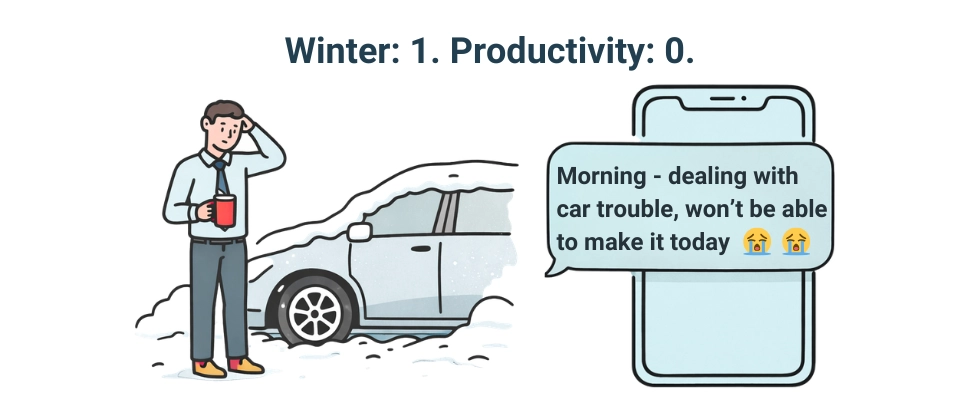
Pet problems
Your cat got a urinary infection, and because he was adopted from the Argentinian favelas, he's super feral and will only let the vet deal with him when you are there. Pet problems are an excuse that keeps on giving.Internet outage (remote work edition)
Remote work excuses have their own genre. “My Wi-Fi is down” can be completely legitimate, or it can be code for “I need a morning to recover from life.” Either way, it’s a reminder: hybrid work challenges include infrastructure and boundaries that don’t exist in the office.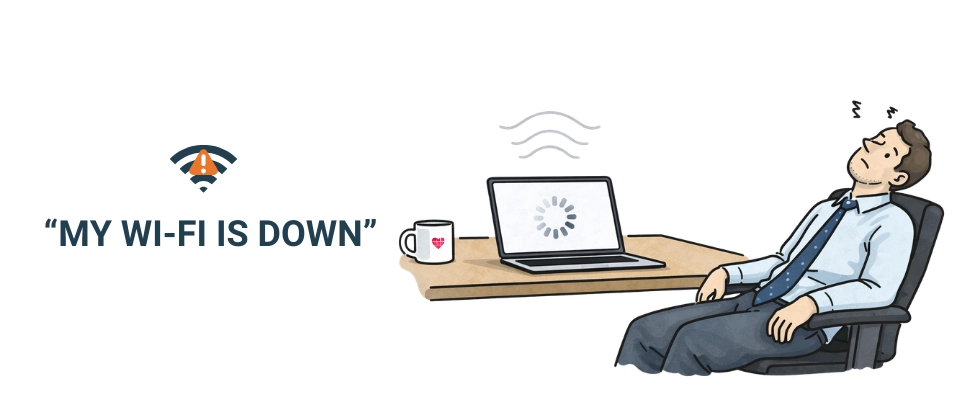
A quick reality check
- Most “classic” excuses are believable because they happen often.
- Even legitimate reasons become suspicious when leaders only measure presence, not outcomes.
- In rigid cultures, people default to “safe” stories instead of telling the truth.
Outrageously creative (and totally weird) excuses
This is the section where people stop trying to sound normal and start trying to sound… convincing. These are the excuses where you can almost hear the employee thinking, “If I make it specific enough, it becomes unchallengeable.”“I’m dealing with a very personal bird issue.”
Translation: "There is a bird, it's somehow relevant, and I will not be answering any additional questions." This is an example of ambiguity at its finest, but with some realistic elements in the form of an animal. It has an odd quality that makes it work.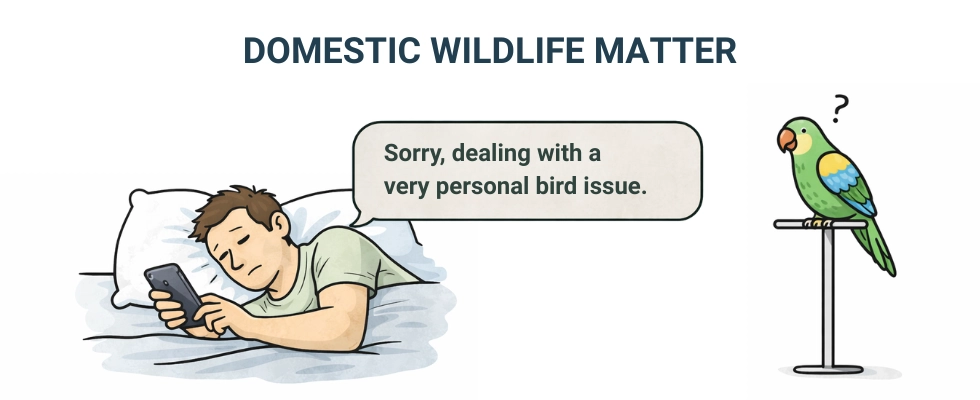
“Stalin came to me in a dream and told me I needed to fight for the proletariat.”
In this case, the employee might want to go on strike, and that's the reason for their missing work. In a worst-case scenario, he might get others to join, and the proletariat really might rise up, so be careful of this one.“I don't even need a computer for remote work; I work using remote viewing.”
This one reframes absence as superiority. The employee isn’t unavailable; they’ve simply exited shared reality. Although it's recently come out, the CIA does indeed have remote viewing programs. The employee's remote viewing capabilities are probably not up to snuff; he'd be working in a CIA black site.
The sad-but-true excuses
Now, the tone shift. Because a lot of “excuses” aren’t jokes. They’re coping mechanisms, especially when people don’t feel safe admitting what’s actually going on. This is where employee attendance issues stop being a comedy list and start looking like a culture signal.Many “excuses” are people trying to protect themselves from judgment. If the only acceptable reason to miss work is being visibly sick, you’ll get a lot of “sick” employees.
“I’ve had a headache all week.”
A headache is possible; however, burnout and absenteeism often show up as physical symptoms. Employees who say, "I'm at my limit," may find this to be more risky than saying, "I don't feel well."“I’m just feeling off today.”
Anxiety, depression, grief, or exhaustion can cause an employee to feel off. In workplaces where there is no psychological safety, employees will describe mental strain using vague language because describing their mental strain in a workplace that does not provide psychological safety would be considered socially unacceptable. The end result is a fog of half-truths.“I have a family thing.”
Family obligations (caregiving) are one of the top causes of missed work time for which employees are embarrassed to admit. Not because the obligation is not valid, but because employees fear that they will be perceived as unreliable by their employers, particularly if the employees' jobs are competitive.“My internet is down again.”
For employees working remotely and/or in hybrid positions, "my internet is down" is sometimes a euphemism for "I am overwhelmed." If employees perceive their work to be available 24/7, they will create distance from their work in the only manner that they can: a legitimate technical issue that cannot be argued with.Why employees invent excuses in the first place
So why do employees make excuses for work? Usually, it’s not because they enjoy lying. It’s because telling the truth feels unsafe, awkward, or costly. When people don’t know what will be held against them, they reach for socially approved scripts. Here are the most common drivers behind employee excuses for missing work.1. Fear of judgment
“If I’m honest, I’ll look unreliable.” People choose safer stories (illness, car trouble) instead of admitting exhaustion, anxiety, or overwhelm.2. Rigid attendance cultures
“Only one type of absence is allowed.” When policies are strict and empathy is low, employees learn to translate real needs into “approved” reasons.3. Low psychological safety
“Truth becomes a performance review risk.” Employees avoid honesty when managers punish vulnerability or interpret absences as a character flaw.Stay ethical & transparent - with WorkTime!


4. Productivity vs. presence pressure
“I must be seen to be valued.” In teams that reward visibility, people create excuses rather than admit they need rest or flexible scheduling.How can you see a pattern with employee excuses?
While public datasets don’t neatly break down call-outs into exact monthly percentages, research shows that certain categories consistently represent the largest shares of workplace absences. For example, health-related issues are often the most frequently reported reason for absenteeism, followed by family and personal obligations such as childcare. Official definitions of absence rates by the Bureau of Labor Statistics include illness, child care problems, and other personal obligations such as transportation issues. These broad categories closely map to the kind of patterns team leaders see in practice.How to handle excuses without killing morale
Here’s the practical part. The goal isn’t to “catch” people. The goal is to reduce employee absenteeism while protecting employee morale and maintaining a culture where people can actually work inside.Over-policing excuses backfires for a simple reason: it teaches employees to get better at storytelling, not better at showing up.What helps? Practices that reduce friction and build trust:
- Assume good intent for one-offs.
- Track patterns over time, not moments.
- Clarify expectations and outcomes.
- Offer support when burnout signals appear.
WorkTime - transparent employee monitoring!
- Rewarding presence over performance.
- Making policies feel punitive and unpredictable.
- Turning every absence into a trial.
Step 1: Identify which absences are anomalies and which ones fit a pattern
One-off weird stories happen, but in most cases, they need to obey the laws of physics as we see them. That being said, five stories about weird excuses in a month means there may be an operational issue that needs to be identified and addressed. If every single absence is treated like a travesty, you are missing the point. Instead of reacting to every moment of absence individually, look for patterns.Step 2: Lessen the "need" for excuses
When employees think they MUST tell some elaborate story for each and every absence, they will. Trust is the key to this problem. The best way to reduce the number of elaborate excuses is by having a healthy culture at your company. If your employees can say, "I need a mental reset," you will likely have fewer made-up illnesses and better employee retention.Step 3: Focus on results (deliverables) rather than presence (visibility)
Managers working in either hybrid or fully remote environments are prone to being focused on whether employees are present, rather than on what they are producing. This is where some friction can occur: Managers want to have absolute certainty over all their employees' work output. Employees feel like they are constantly being watched and, therefore, fabricate reasons for their absence. Immediately after switching to focus on deliverables, friction decreases.Monitor & support your remote teams
Step 4: Utilize data to guide coaching (versus policing)
The cold, hard truth here is that when leaders have insight into how employees are using their time to complete their work and the direction of their workload, they don't need 1,000 excuses. They will know if a team has too much work, if collaboration is taking longer, and if overall productivity is decreasing, without having a surveillance system akin to a North Korean gulag.Step 5: Catch early warning signs before absences turn into a bigger problem
Most “random” absences aren’t random at all. They’re often the final stage of a slow decline: workload overload, low engagement, burnout, or a team that’s quietly falling behind. The smartest move isn’t to interrogate every absence. It’s about noticing productivity signals early, while the situation is still fixable. This is where WorkTime helps. It lets managers analyze performance and workload patterns across the team - transparently and ethically. This way, they can spot when something is going wrong before it becomes a recurring absence issue. And because WorkTime is non-invasive (no screenshots, no spying, no intrusive tracking), you get clarity without damaging trust or employee privacy.Checklist: a healthier way to manage call-outs
- Respond calmly to one-offs. Don’t turn a single absence into a courtroom.
- Track category-level patterns (illness, caregiving, workload overload) over weeks.
- Address root causes: meeting overload, unclear priorities, poor handoffs, and burnout risk.
- Clarify expectations based on outcomes, not “always-on” presence.
- Support managers with visibility tools that reduce the need for interrogation.
Bottom line: The best excuse is the one you never needed
Sick of hearing about how the Mongolian conquest of Uzbekistan during the 13th century is somehow preventing your employees from working? If you are an employee, you are probably also tired of all the deceit and trickery involved in just needing a day off. Sometimes, with remote and hybrid teams, communication can be difficult, as we aren't robots. We are real human beings with real needs and desires. This is why WorkTime improves communication and flow by producing visibility to all stakeholders involved. With WorkTime, the excuses don't get crazier; they just stop being used at all.Try WorkTime now!