• Deutsch

    Deutsch

  • English

    English

  • Español

    Español

  • Français

    Français

  • Italiano

    Italiano

  • Português

    Português

WorkTime - workplace stress statistics.

July 8, 2026

11 min read

40+ workplace stress statistics for 2026 (causes, costs & impact)

TL;DR

  • 77% of US workers reported work-related stress in the past month, and 41% worldwide felt significant stress the prior day.
  • Workload and job are the leading drivers. 54% of US workers now say job insecurity significantly affects their stress, up sharply from a year earlier.
  • Stress costs US employers about $300 billion a year in absenteeism, lost productivity, accidents, and medical bills.
  • Around 1 million Americans miss work every day because of stress, and stress drives close to 40% of employee turnover.
  • Workplace stress is tied to roughly 120,000 deaths a year in the United States, with healthcare costs about 50% higher for highly stressed workers.
Workplace stress is close to universal. 77% of US workers reported a work-related stress symptom in the past month, and 41% of employees worldwide felt significant stress the day before they were surveyed. The financial impact is just as significant. Job stress drains an estimated $300 billion a year from US employers and is linked to roughly 120,000 deaths annually. We pulled the most important workplace stress statistics for 2026 and grouped them by prevalence, causes, cost, productivity, and health. Every number traces to its primary source, from the American Psychological Association and Gallup to OSHA, the WHO, and federal health agencies. WorkTime publishes this data as a maker of non-invasive employee monitoring software, so the focus stays on what the numbers mean for the people doing the work.
The article is presented by WorkTime, providing non-invasive productivity analytics that help organizations build healthier workplaces, improve employee engagement, and support well-being without intrusive monitoring.

How common is workplace stress?

Most US workers experience workplace stress. Between 65% and 83% report work-related stress depending on how the question is framed, and 77% reported a stress symptom in the past month. 1. Notably, 77% of US workers experienced at least one symptom of work-related stress in the past month. That is the headline finding from the American Psychological Association's Work in America survey. 2. Around 41% of employees globally felt significant stress during a lot of the previous day. That is the most recent single global stress reading from Gallup's State of the Global Workplace report. 3. According to OSHA's workplace stress overview, 83% of US workers suffer from work-related stress. 4. According to APA data published by OSHA, 65% of US workers characterized work as a significant source of stress from 2019 to 2021. 5. Significantly, 43% of employees say they typically feel tense or stressed during the workday. That comes from the APA's Work in America survey. 6. Based on an SHRM analysis of workplace mental health published in early 2025, 31% of US workers say their job makes them feel stressed always or often. 7. According to the American Institute of Stress, 47% of people say the majority or all of their stress comes from work. 8. Across the workforce, 1 in 4 employees view their job as the number one stressor in their lives - a finding the National Institute for Occupational Safety and Health has long cited from Northwestern National Life research. 9. According to the Anxiety and Depression Association of America, 40% of workers report persistent stress or excessive anxiety in daily life. 10. Regarding the ADAA workplace survey, 72% of people who deal with daily stress and anxiety say it interferes with their lives at least moderately.

What causes workplace stress?

Workload is the most common driver of workplace stress, followed by management problems, low pay, and a sharp recent rise in job insecurity. The leading causes are consistent across major surveys. 11. Deadlines (55%), interpersonal relationships (53%), staff management duties (50%), and unexpected problems (49%) are the top reported causes of workplace stress, according to the ADAA workplace survey. 12. Workload (37%), pay (33%), understaffing (31%), and poor leadership (29%) rank as the biggest stress contributors in an SHRM survey of US workers.
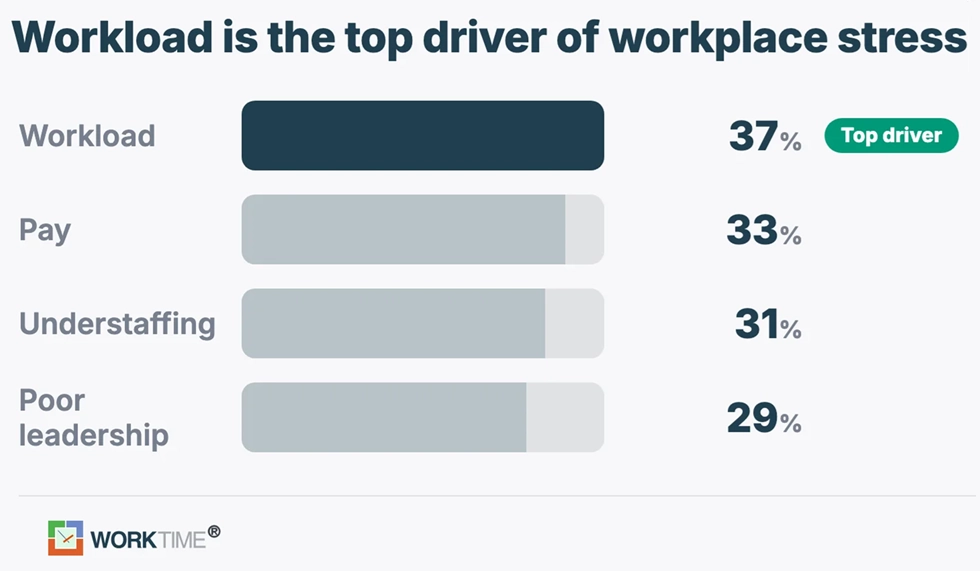
WorkTime data on stress drivers.
13. According to statistics, 54% of US workers say job insecurity significantly affects their stress levels. The APA's findings on job insecurity flagged this as a defining stress story of the year. 14. Per the same APA release, 44% of workers worry an economic downturn could cost them their job within the year, up from 36% the year before. 15. According to the American Institute of Stress, 39% of North American employees name workload as the main source of their work stress. 16. Also, 35% of workers say their boss or manager is a cause of their workplace stress. 17. Another finding from the American Institute of Stress research shows that 80% of workers feel stress because of ineffective company communication. 18. Working 55 or more hours a week is linked to higher stress and serious health risks, a relationship documented by the World Health Organization.
Top cause of workplace stress (ADAA) Share of workers reporting it

Meeting deadlines

55%

Interpersonal relationships

53%

Staff management duties

50%

Dealing with unexpected problems

49%

Workplace stress by age and generation

Younger and mid-career workers report the most workplace stress, and the gap with older workers is wide. Stress tends to fall as employees age. 19. Workers aged 26 to 43 are the most likely to feel tense or stressed at work, at 51%, falling to 17% among workers 65 and older, according to the APA's Work in America survey.
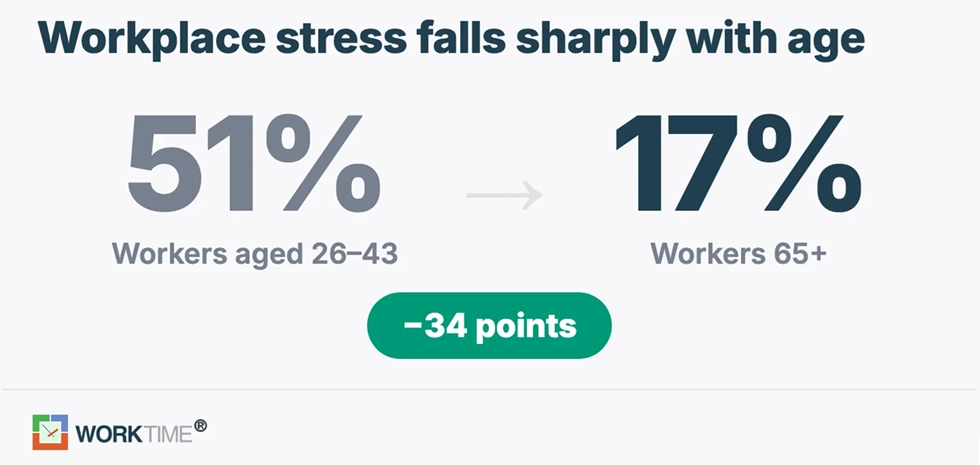
WorkTime stress levels by age group.
20. Gen Z and Millennial workers are the most likely to change jobs to escape a draining environment, a pattern documented in SHRM's workplace mental health analysis. When chronic stress goes unmanaged in these groups, it often hardens into burnout. We track that downstream condition separately in our employee burnout statistics.

Workplace stress by industry

Healthcare is consistently rated the most stressful industry, with frontline care, creative fields, and service work close behind. Stress concentrates in jobs with high stakes and little control. 21. Healthcare ranks as the most stressful industry, with an average stress level of 6.88 out of 10 versus 6.23 across all industries, based on a Vivian Health survey. 22. Workers in arts, design, entertainment, sports, and media report the highest rate of frequent mental distress, about 1.3 times the overall rate, according to a JAMA Network Open study highlighted by the American Psychiatric Association. This tracks mental-distress prevalence rather than the self-rated stress scores behind the healthcare ranking above, and about 1 in 10 US workers report frequent mental distress overall.

Remote vs. in-office stress

Most US workers are still in the office, and where people work shapes their stress in different ways. The commute and the office are stressors for some, while isolation is a stressor for others. 23. According to the APA's Work in America survey, 41% of US workers are fully in person, 24% are hybrid, and 17% are fully remote. Far more workers say they would prefer remote or hybrid arrangements than currently have them. 24. Per Gallup's State of the Global Workplace, 1 in 5 employees report feeling lonely, rising to 25% on fully remote teams. Comparing stress across remote and in-office staff only works if both groups are measured the same way. WorkTime's remote versus in-office comparison puts the two side by side using productivity data, with no screenshots or screen recording.
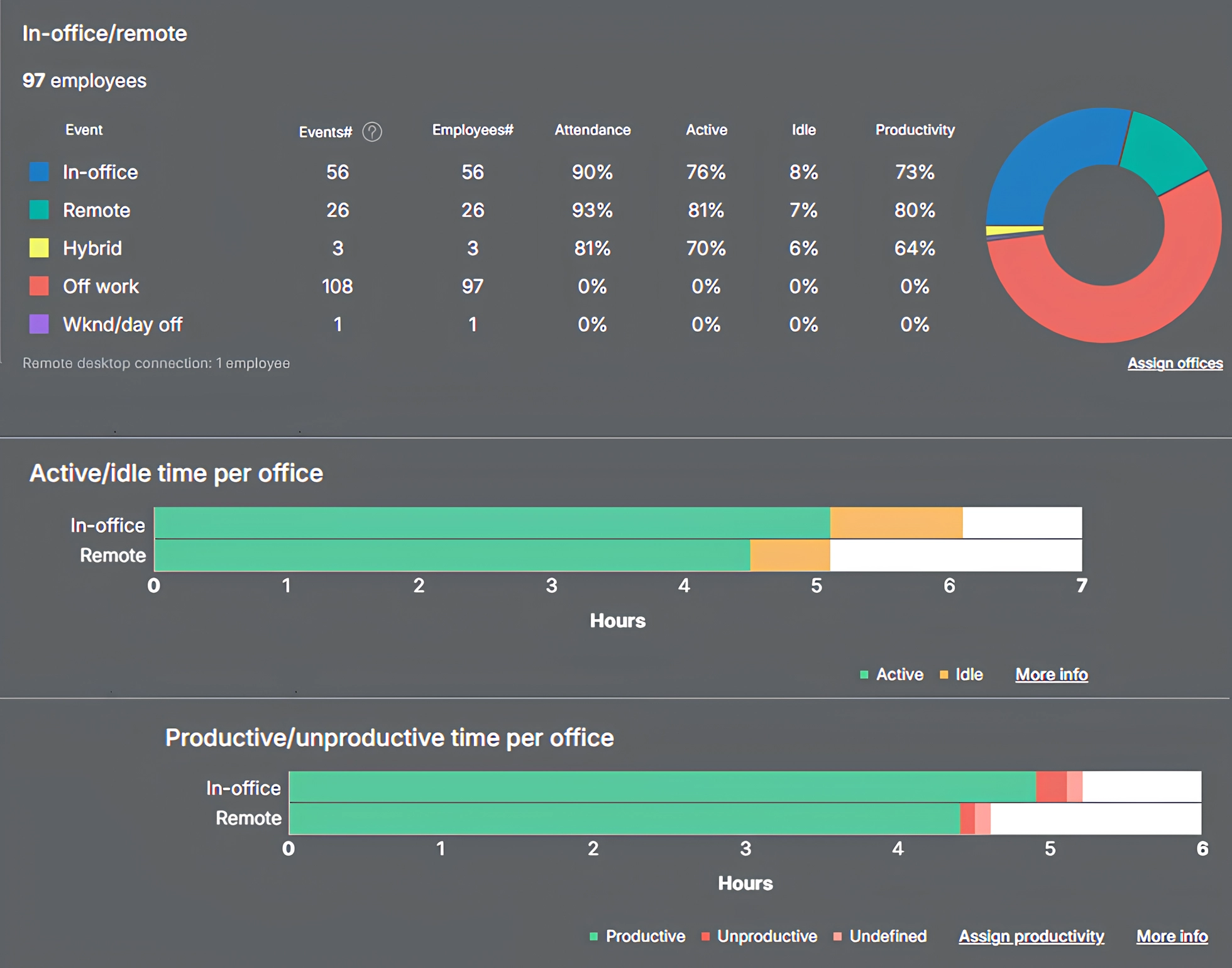

WorkTime remote versus in-office teams comparison.
WorkTime

See how productivity varies across office, home, and remote work environments with transparent attendance and performance analytics.

Start free trial

What workplace stress costs employers

Workplace stress is one of the most expensive problems in business. The direct and indirect costs run into the hundreds of billions of dollars every year in the United States alone. 25. Job stress costs US industry more than $300 billion a year in absenteeism, reduced productivity, accidents, and medical and legal expenses, according to the American Institute of Stress.
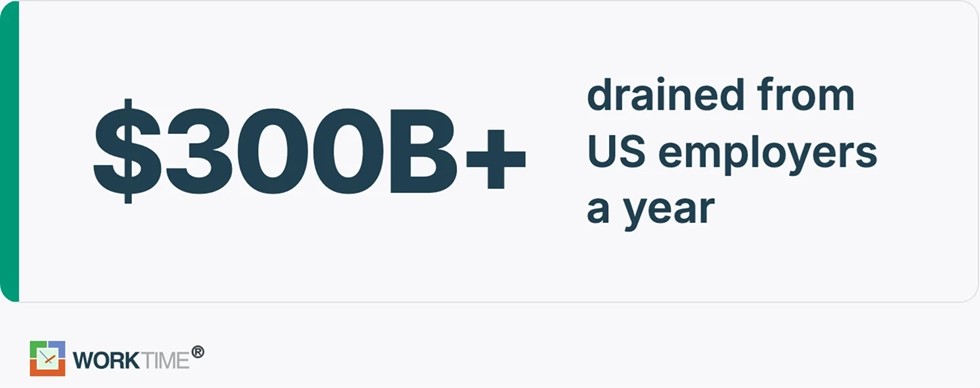
WorkTime workplace stress cost insights.
26. Workplace stress drives up to $190 billion a year in US healthcare costs, a figure cited by OSHA. 27. According to the World Health Organization, 12 billion working days are lost worldwide each year to depression and anxiety, costing about $1 trillion in lost productivity. 28. Burnout and disengagement cost an average US company of 1,000 employees more than $5 million a year, based on research referenced by OSHA. 29. Healthcare costs are nearly 50% higher for workers who report high stress, according to a Journal of Occupational and Environmental Medicine study cited by NIOSH. 30. Employers see about $4 in return for every $1 invested in employee mental health, per data published by OSHA.
The cost of workplace stress Figure Source

US industry cost per year

More than $300 billion

American Institute of Stress

US healthcare costs tied to stress

Up to $190 billion/year

OSHA

Global productivity lost to depression and anxiety

About $1 trillion/year

World Health Organization

Cost to an average 1,000-employee company

More than $5 million/year

Gallup, via OSHA

Return per $1 invested in mental health

$4

OSHA

How workplace stress hurts productivity

Stress shows up on the bottom line through missed work, lower output, and people walking out the door. It is one of the strongest predictors of turnover. 31. About 1 million Americans miss work every day because of stress, according to the American Institute of Stress.
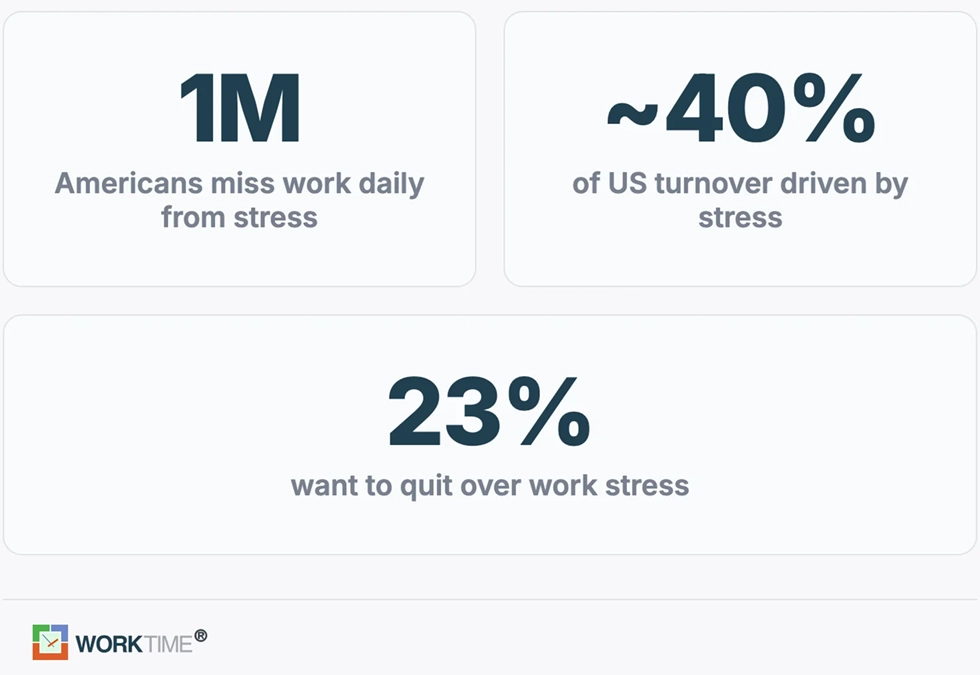
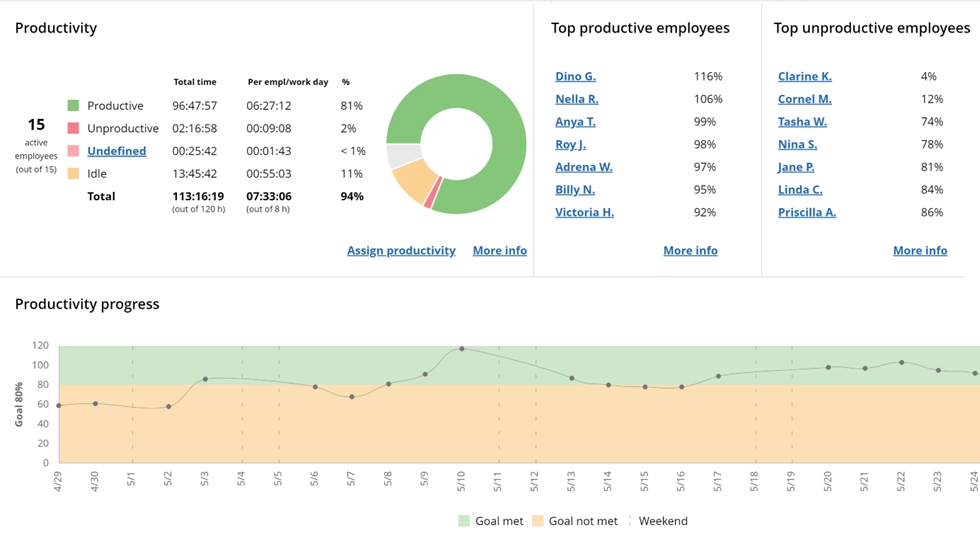
WorkTime stress impact on attendance and turnover.
32. Workplace stress is responsible for roughly 40% of employee turnover in the United States, based on SHRM data. 33. According to the APA's Work in America survey, 23% of workers say they want to quit specifically because of work-related stress. 34. Workers on stress-related leave are absent about 20 days on average, a Bureau of Labor Statistics figure cited by NIOSH. 35. According to the American Institute of Stress, 80% of employees report productivity anxiety, and more than a third feel it several times a week. 36. Stress leaves 26% of workers with low energy, 21% with reduced concentration, and 18% with lower productivity. Much of the cost is invisible. Stressed employees who stay on the job but work at reduced capacity account for the largest share of lost output, often more than outright absence. Sustained, that quiet drag is what erodes employee productivity across a team.
WorkTime productivity summary report.

Gain the productivity insights you need without creating a culture of surveillance!

Book demo

WorkTime productivity monitoring.

WorkTime's transparent, non-invasive approach helps employees stay focused and engaged instead of feeling watched.

Start free trial

The health impact of workplace stress

Workplace stress is a serious health risk, not just a comfort problem. It is linked to higher rates of physical illness, mental illness, and premature death. 37. Workplace stress is reported to cause about 120,000 deaths a year in the United States. OSHA cites this estimate, drawn from research by Goh, Pfeffer, and Zenios, on its workplace stress page.
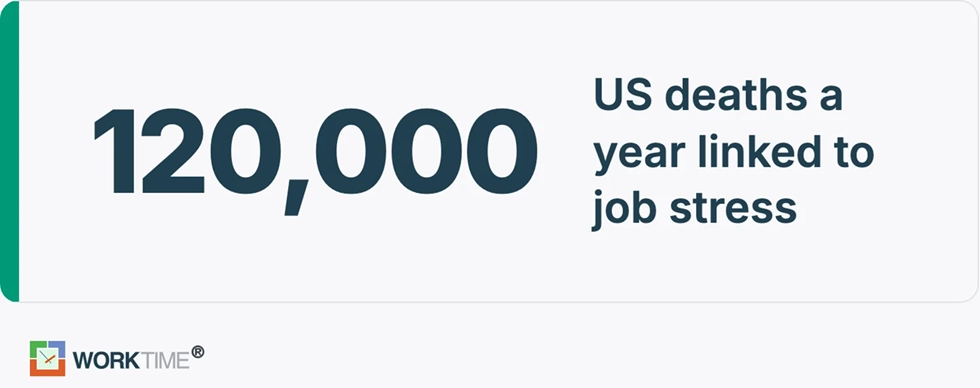
WorkTime job stress key statistics.
38. Long working hours of 55 or more per week contributed to an estimated 745,000 deaths globally from heart disease and stroke, according to the World Health Organization. 39. Per the World Health Organization, 15% of working-age adults were estimated to be living with a mental disorder. 40. Nearly 1 in 5 US adults live with a mental illness, a National Institute of Mental Health figure cited by OSHA. 41. Work problems are more strongly tied to health complaints than any other life stressor, including financial and family problems, according to St. Paul Fire and Marine Insurance research cited by NIOSH. 42. Based on WHO data published by OSHA, 54% of workers say job stress affects their life at home. 43. According to the APA's findings on job insecurity, 42% of workers worried about losing their job say the stress impairs their sleep. 44. Based on Princeton Survey Research Associates' findings cited by NIOSH, 3 in 4 employees believe workers face more on-the-job stress than a generation ago.

Spotting workplace stress before it costs you

The numbers above are mostly lagging indicators. By the time stress shows up as turnover, sick days, or a healthcare claim, the damage is already done. The harder problem is seeing stress build while there is still time to act. That is where non-invasive measurement helps. WorkTime reads the early signals that point to rising stress, such as declining active time, climbing distraction levels, attendance drift, and emerging burnout patterns, without screenshots, keystroke content, or screen recording. Watching distraction levels rather than reading over shoulders means managers get a real read on workload without piling on the watched-all-day pressure that makes stress worse.

The bottom line

insecurity has pushed the numbers higher, and the bill lands on employers as turnover, lost output, an The organizations that get ahead of it measure stress signals early instead of waiting for the exit interview. WorkTime is non-invasive employee monitoring software built for exactly that. Built-in GDPR-, HIPAA-, and GLBA-safe modes provide peace of mind for employers, while transparent, privacy-first monitoring avoids adding unnecessary stress for employees. It surfaces the productivity and attendance signals that flag rising stress. To put those early signals to work on your own team, start a free 14-day WorkTime trial.


Frequently asked questions

How common is workplace stress?

Workplace stress affects most workers. 77% of US workers reported a work-related stress symptom in the past month, according to the American Psychological Association, and 41% of employees worldwide felt significant stress the prior day, according to Gallup.

What is the number one cause of workplace stress?

Workload and deadlines are the most common causes of workplace stress, named in survey after survey. Job insecurity has risen sharply as a driver, with 54% of US workers in 2025 saying it significantly affects their stress.

How much does workplace stress cost employers?

Workplace stress costs US employers more than $300 billion a year in absenteeism, lost productivity, accidents, and medical costs, according to the American Institute of Stress. Stress-related healthcare spending alone runs up to $190 billion a year.

Which workers are most stressed?

Workers aged 26 to 43 report the highest workplace stress at 51%, and healthcare is rated the most stressful industry. Stress generally falls with age, dropping to 17% among workers 65 and older.

Is remote work less stressful than working in an office?

It depends on the worker. Remote work removes commute and office stress for many people but raises isolation, with 1 in 5 employees reporting loneliness and the rate running higher on remote teams. The arrangement matters less than workload, management, and job security.

How does workplace stress affect productivity?

Workplace stress lowers output through missed work and reduced focus on the job. About 1 million Americans miss work each day because of stress, and it drives close to 40% of employee turnover in the United States.

WorkTime

Employee monitoring software

WorkTime

Non-invasive - the only non-invasive software on the market

25+ years on the market

80+ reports: attendance, productivity, active time, online meetings, remote vs. in-office and more

WorkTime WorkTime WorkTime WorkTime WorkTime WorkTime WorkTime

What’s next

worktime monitoring in workplace Statistics workplace stress statistics