


TL;DR
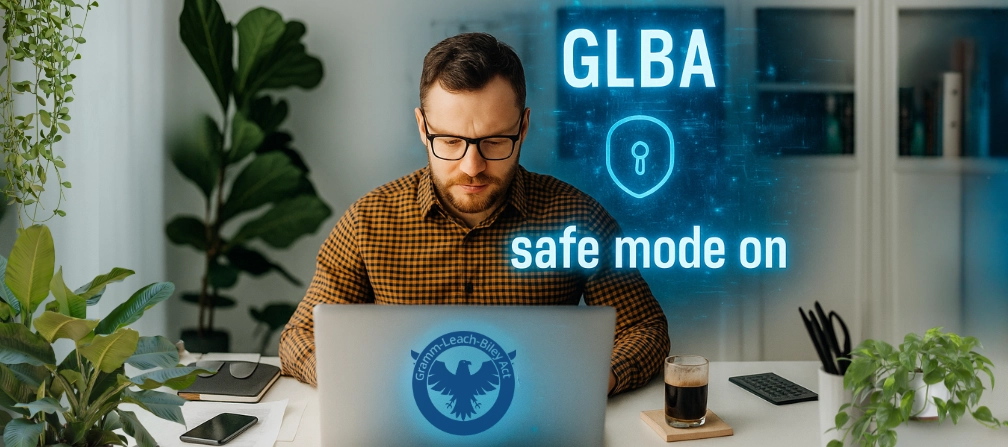
- Insurance companies face dual compliance pressure. GLBA protects Non-Public Personal Information (NPI), and 22+ states have enacted the NAIC Insurance Data Security Model Law, requiring insurers to monitor user activity.
- Screenshot-based monitoring creates compliance risk. Tools that capture screen content can collect policyholder NPI, claims data, or health information, creating the very data breaches insurers are trying to prevent.
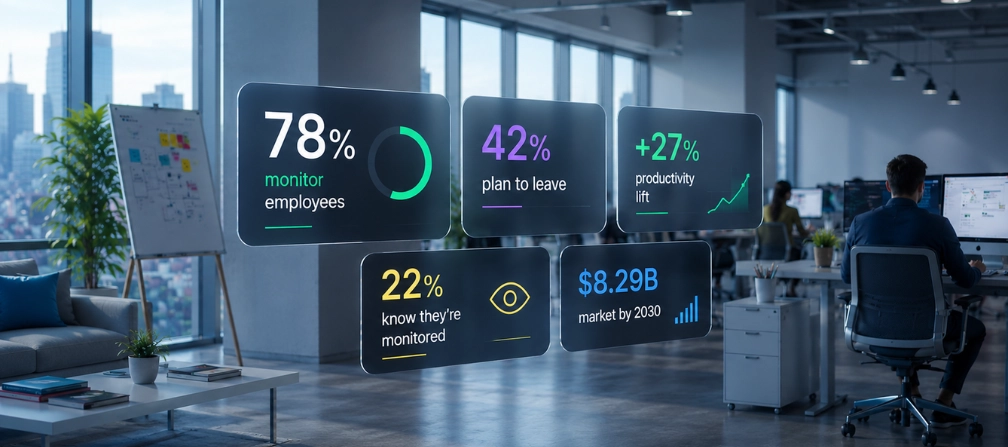
- Non-invasive monitoring solutions deliver better results. A study in Human Behavior and Emerging Technologies found 60% of employees felt constant surveillance eroded trust, reducing morale and employee productivity.
- Insurance-specific ROI is proven. M&M Insurance saved $50,000 in one year by eliminating false overtime claims after discovering 70% of computers were used for non-work activities (WorkTime).
In this article
The article is prepared by WorkTime - delivering transparent, GLBA-safe monitoring designed for compliance-focused insurance organizations.
Why insurance companies need employee monitoring
Regulatory mandates demand it
The Gramm-Leach-Bliley Act requires financial institutions, including insurance carriers, agents, and brokers, to safeguard consumer NPI. Over 22 states have enacted the NAIC Insurance Data Security Model Law, which explicitly requires insurers to monitor authorized user activity and detect unauthorized access. If you operate in one of those states, employee monitoring software is part of your compliance obligations. Insurance companies that also handle health insurance must comply with both HIPAA (for PHI) and GLBA (for NPI), and your monitoring solutions must meet both requirements without capturing the data they are designed to protect.Remote work reshaped the insurance industry
According to Bureau of Labor Statistics data, 30% of finance and insurance employees now work fully remote, the highest percentage of any industry. 78% of insurance professionals report higher output when working remotely. But without employee monitoring software in place, managers lack visibility into employee activity, employee attendance, and work hours for remote employees.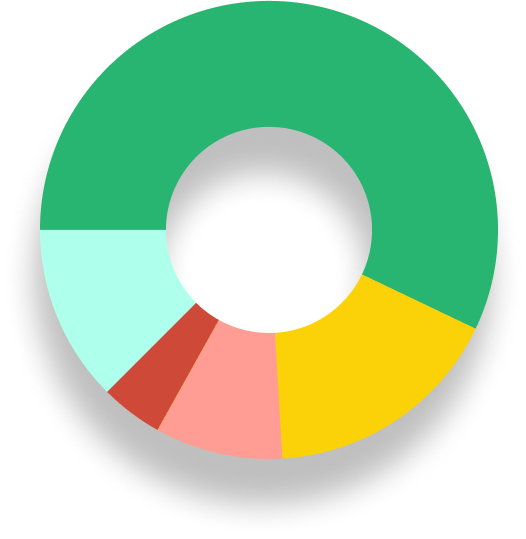
The talent gap is real
The Bureau of Labor Statistics projects 400,000 insurance professionals will retire between 2021 and 2026 (James Allen Companies). That creates waves of new hires who need assessment during probation periods. Employee monitoring software gives you the data to evaluate employees' performance based on detailed analysis of performance patterns, not guesswork.What insurance companies should look for in employee monitoring software
Not every monitoring software fits the insurance industry. Here are the key features to prioritize when you choose employee monitoring software.GLBA-safe monitoring
Your employee monitoring solution should never capture, process, or store NPI. Tools with content capture, screen recording, or screenshot features can inadvertently record policyholder Social Security numbers, account details, or claims data. That is a GLBA violation waiting to happen. Non-invasive monitoring solutions that track only productivity metrics, app usage, and employee attendance operate outside the scope of NPI entirely. {SHORTCODE:worktime-glba-safe-employee-monitoringOn-premise and cloud deployment options
Insurance companies handling confidential data often prefer on-premise deployment to keep workforce data on company hardware. Your employee monitoring software should offer both cloud and on-premise deployment with secure data storage. So, your IT team can choose based on your security posture.Remote and hybrid team support
With the insurance industry leading all sectors in remote work adoption, your tracking software needs to monitor remote employees and in-office staff with equal depth. Look for monitoring features that compare remote vs. in-office employee productivity side-by-side. So, you can make decisions based on real data.Attendance and overtime tracking
Insurance fraud costs the U.S. $308.6 billion annually, and operational efficiency starts with your own workforce. Employee attendance monitoring, overtime verification, and idle time detection help insurance companies catch false overtime claims and reduce unproductive time during paid work hours.Employee engagement and burnout detection
High-stress claims roles and the retirement wave put pressure on remaining staff. Monitoring solutions that track burnout signs and productivity level changes help you retain valuable employees before they leave.Top 6 employee monitoring software for insurance companies
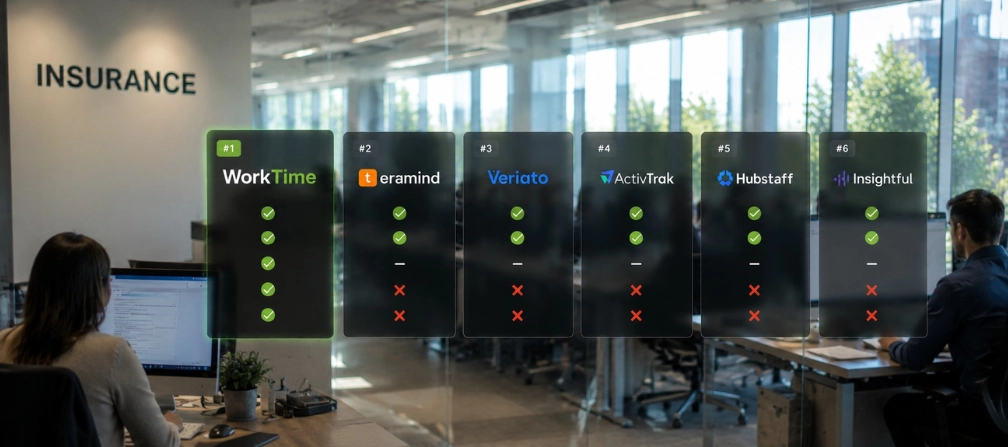
1. WorkTime: Best for non-invasive, GLBA-safe insurance monitoring
Best for: Insurance carriers, agencies, and brokers that need workforce productivity tracking and attendance oversight without risking NPI exposure. WorkTime takes a fundamentally different approach to employee monitoring. WorkTime tracks productivity scores, active and idle time, employee attendance, app usage, and internet activity without capturing screenshots, screen content, keystroke content, emails, or chat messages. This means WorkTime never touches policyholder NPI, making it GLBA-safe by design. For health insurers, WorkTime also offers a HIPAA-safe mode that prevents indirect collection of PHI. No other employee monitoring solution on this list provides compliance modes for both frameworks.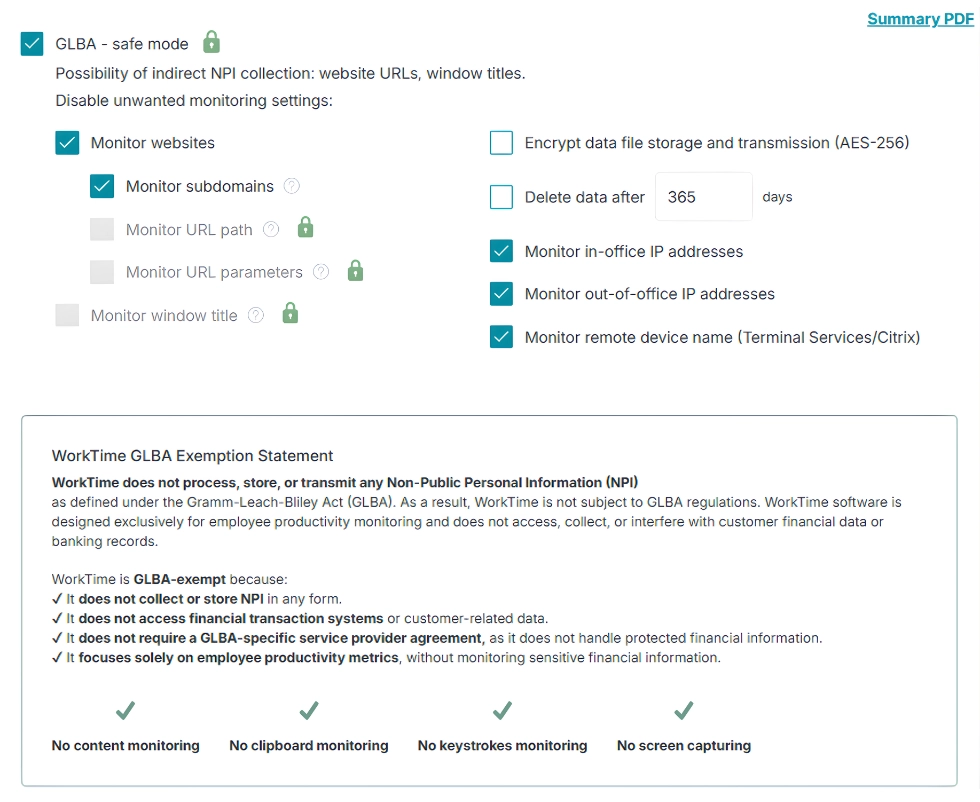

With GLBA-safe mode, WorkTime delivers secure workforce monitoring designed to meet the expectations of strict financial compliance environments.
Start free trial- Non-invasive activity tracking with AI-assisted app and website categorization
- Remote vs. in-office productivity comparison using IP-based location detection
- Employee attendance monitoring with login/logout tracking
- Overtime fraud detection and idle time alerts
- Burnout signs tracking for high-stress claims teams
- New hire assessment tools for probation-period evaluation
- 70+ reports with scheduled delivery
- On-premise and cloud deployment with AES-256 encryption.
$50,000 saved in just one year!
$50K
saved
Industry
Insurance
Employees
5,000+
WorkTime helped M&M Insurance improve compliance, eliminate false overtime claims, and boost accountability across distributed teams - all non-invasively!
Read more
Try WorkTime now!


2. Teramind: Best for insider threat detection in large insurance carriers
Best for: Enterprise insurance companies with dedicated security teams that need insider risk management, data loss prevention, and forensic-grade user behavior analytics. Teramind provides the most thorough monitoring on this list. It records user sessions, captures keystrokes, monitors email content, and applies behavior rules to detect anomalous employee activity in real time. For large P&C carriers facing insider threats, Teramind offers advanced analytics that other employee monitoring solutions cannot match.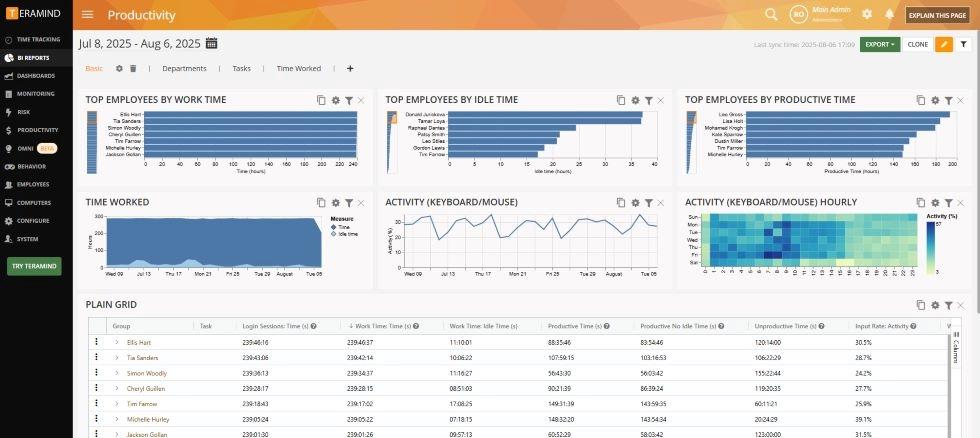
- Real-time monitoring with live screen monitoring and session recording
- Keystroke logging and behavioral analytics with AI-powered anomaly detection
- DLP with content-aware policy enforcement
- SIEM integration for security operations workflows
- Behavior rules and automated response actions
- Detailed time tracking and productivity analysis.
3. Veriato: Best for forensic investigation and claims fraud teams
Best for: Insurance fraud investigation units and compliance teams that need forensic recording and AI-driven risk scoring for employee data analysis. Veriato focuses on forensic-grade activity recording and uses AI to score employee activity by risk level. Insurance fraud investigation teams use it to identify suspicious patterns across large employee populations, with session recordings serving as evidence-quality documentation.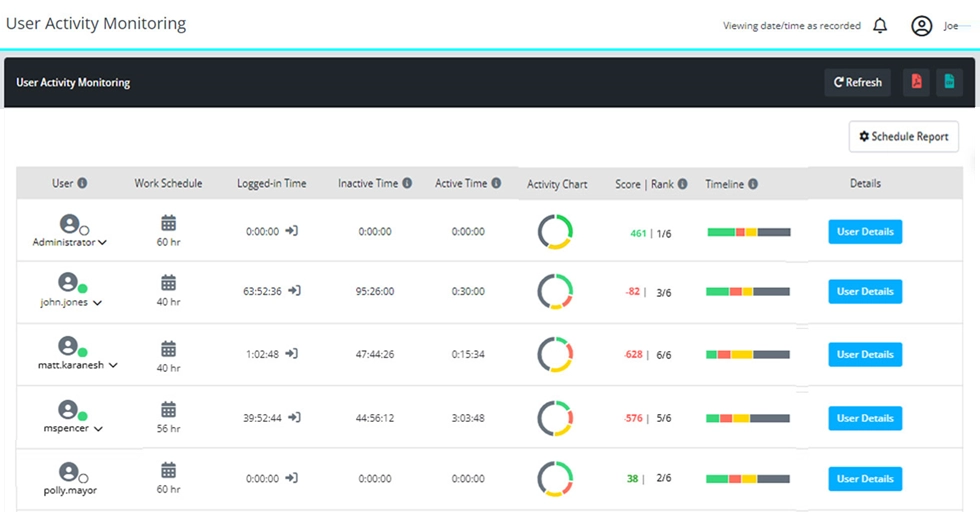
- AI-driven insider threat detection with risk scoring
- Full session recording for forensic investigation
- Detailed analysis of employee activity patterns
- Productivity analysis dashboards
- Cloud and on-premise deployment options.
4. ActivTrak: Best for workforce analytics on hybrid insurance teams
Best for: Mid-size insurance agencies and regional carriers that want team-level performance visibility without individual surveillance across distributed insurance offices. ActivTrak generates productivity insights at the team level rather than creating individual surveillance dossiers. It tracks app usage, website activity, and time allocation, then surfaces patterns through workforce analytics dashboards. For insurance companies focused on employee engagement and workload balance, ActivTrak provides valuable feedback on how distributed teams operate.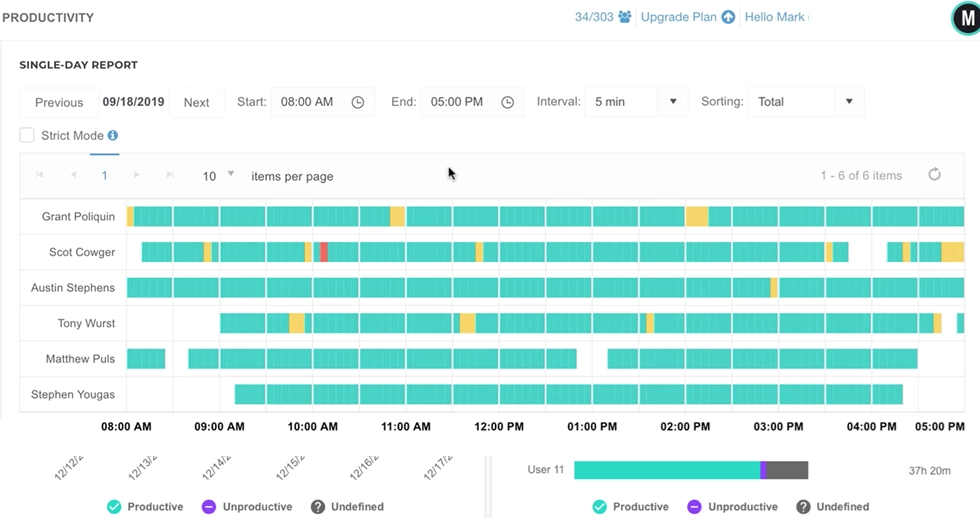
- Automated monitoring with AI-powered activity categorization
- Workforce analytics dashboards with productivity trends
- Burnout risk detection and workload balance tools
- App usage and website tracking
- Capacity planning analytics for capacity planning.
5. Hubstaff: Best for field teams and claims adjuster tracking
Best for: Insurance companies with mobile claims adjusters, field investigators, or distributed agency networks that need GPS tracking and time tracking alongside employee monitoring. Hubstaff combines time tracking with location monitoring, making it the strongest option for insurance companies managing employees who work outside an office. Claims adjusters visiting policyholders, field investigators conducting site inspections, and agency managers overseeing remote workers all benefit from Hubstaff's tracking on any internet-enabled device with mobile apps.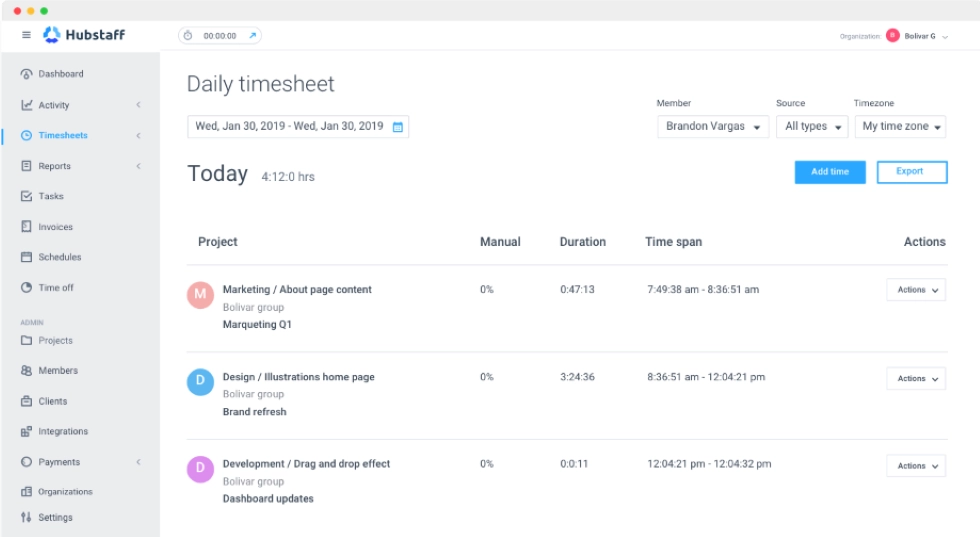
- GPS and geolocation tracking for field workers
- Time and attendance tracking with project budgets and client billing
- Screenshot capture at configurable intervals
- App and web activity tracking
- Payroll integration and automated invoicing
- User-friendly interface across desktop and mobile apps.
6. Insightful: Best for flexible oversight in insurance operations
Best for: Insurance companies that want flexibility to adjust oversight intensity by department, from non-invasive productivity tools for underwriting teams to optional screenshots for claims processing oversight. Insightful offers a sliding scale of monitoring features. You can enable or disable screenshots and blur captured images for added privacy. This flexibility lets insurance operations managers set different monitoring solutions for different teams based on the sensitivity of the client data they handle.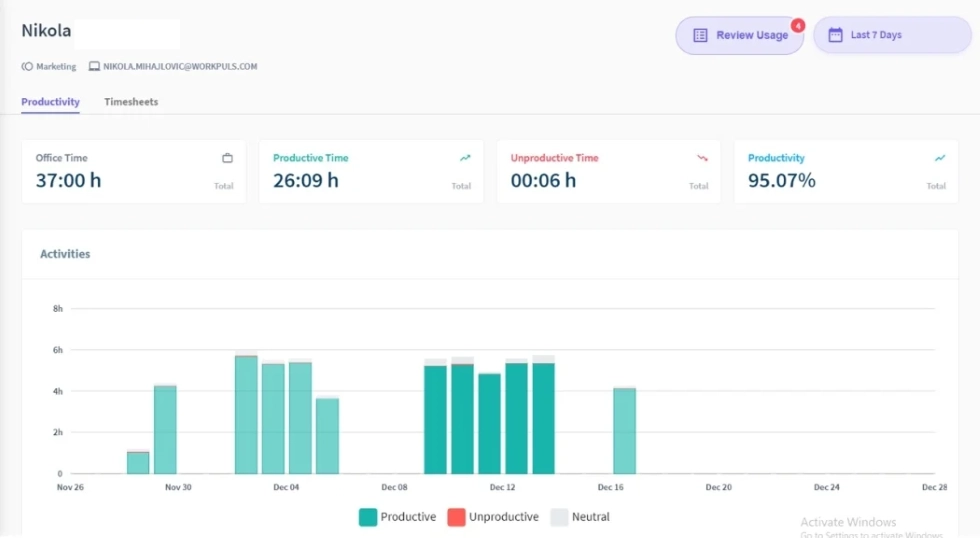
- Adjustable controls by team or department
- Optional blurred screenshots for privacy-conscious deployments
- Real-time monitoring dashboards with employee activity tracking
- Attendance and hours tracking
- Productivity insights and employee performance reports
- Track employee activity across corporate devices.
How we evaluated these tools
We evaluated the best employee monitoring software across five categories for the insurance industry:- GLBA and regulatory compliance: Does the tool support GLBA-safe monitoring? Does it avoid capturing NPI? Does it offer on-premise deployment?
- Productivity monitoring depth: Can it track employee productivity, employee attendance, app usage, and work hours across all locations?
- Insurance-relevant features: Does it address overtime fraud, new hire assessment, burnout detection, and workforce management for insurance operations?
- Scalability and deployment: Can it serve insurance companies ranging from small agencies to 5,000+ employee carriers? Does it offer cloud, on-premise, or hybrid deployment?
- Privacy and employee trust: Does the monitoring approach protect employee privacy and support transparent monitoring practices that maintain employee engagement?T
Final thoughts
The insurance industry sits at the intersection of high remote work adoption, strict data privacy regulations, and growing operational efficiency demands. The right employee monitoring software helps you monitor remote employees, track employee activity, and optimize workflows while enhancing productivity without the compliance risks that invasive monitoring tools introduce. For insurance companies that need GLBA-safe productivity monitoring, employee attendance tracking, and in-depth reporting across distributed workforces, WorkTime provides a non-invasive employee monitoring solution built for regulated industries. Trusted by 9,500+ organizations with 28 years in the market, WorkTime gives you workforce visibility without capturing personal content. Start your free 14-day WorkTime trial to see how non-invasive monitoring works for your insurance team.Try WorkTime now!