


TL;DR
- Micromanagement vs. employee monitoring isn’t a debate about accountability; it’s a debate about signal quality.
- Employee monitoring without micromanagement focuses on trends, workload visibility, and outcomes, not constant observation.
- Ethical employee monitoring protects autonomy by avoiding screenshots, keystrokes, and content capture.
- Performance monitoring without micromanaging helps managers coach better and helps employees work with less pressure.
In this article
This article is prepared by WorkTime, the leader in non-invasive employee monitoring solutions.Micromanagement is really a horrible phenomenon, for both employers and employees. From an employer's perspective, you don't want to feel like a jail warden, but you also need to make sure everyone is operating at 100% capacity from a productivity standpoint. From an employee's standpoint, you didn't sign up to live under Kim Jong Un's North Korea; you just want to do well at your job. There is a tradeoff to this; instead of micromanaging, you can use non-invasive monitoring. But how do you do that? Let's break it all down below.
Where monitoring ends and micromanagement begins
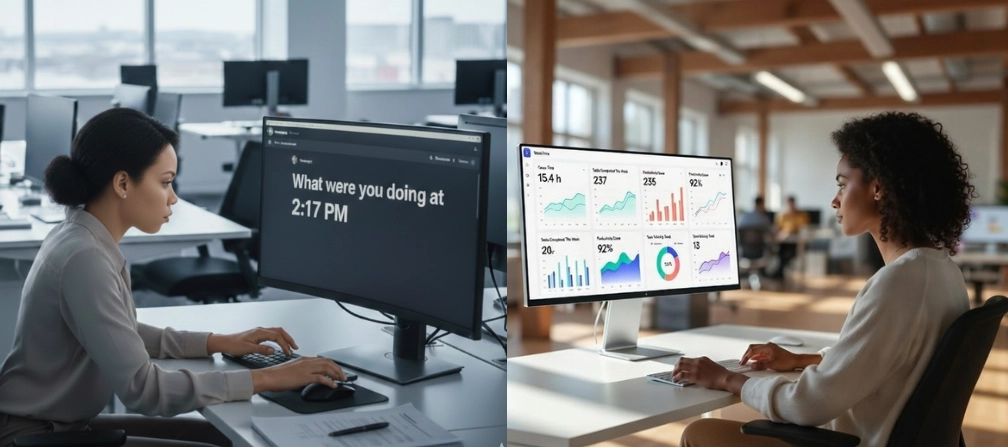
Monitoring can sometimes turn into a slippery road leading to micromanagement. At the end of the day, this really is about how your employees feel.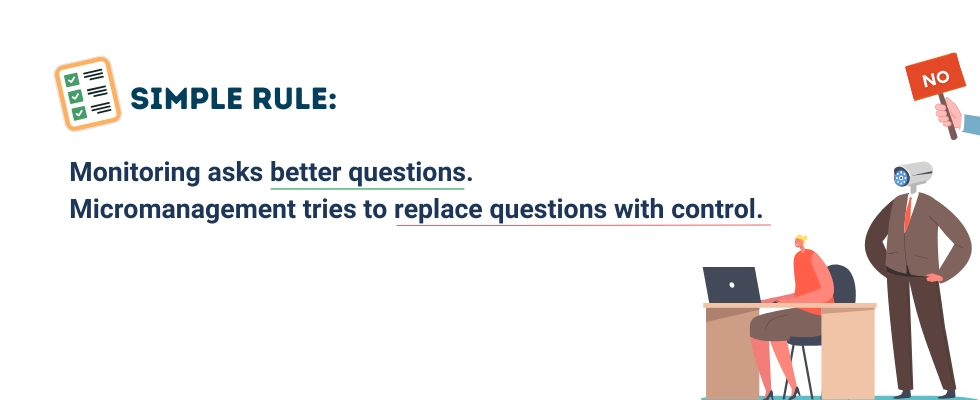
What is the difference between employee monitoring and micromanagement?
Monitoring feels like support + clarity:- Trend-level visibility into your workload and progress
- Monitoring data can be used to inform coaching sessions and identify productivity patterns
- Clear expectations are provided while still allowing you to have some autonomy
- Focus on outcomes and consistency.
- Micromanaging involves continuously justifying every minute detail of what you do at the moment
- Significantly more interruptions, approvals, and "quick updates."
- Less ownership and slower decision-making
- Focus on visibility instead of outcomes.
How can you tell which side you’re on
Below are some typical questions you might ask during the weekdays. Which side are you on?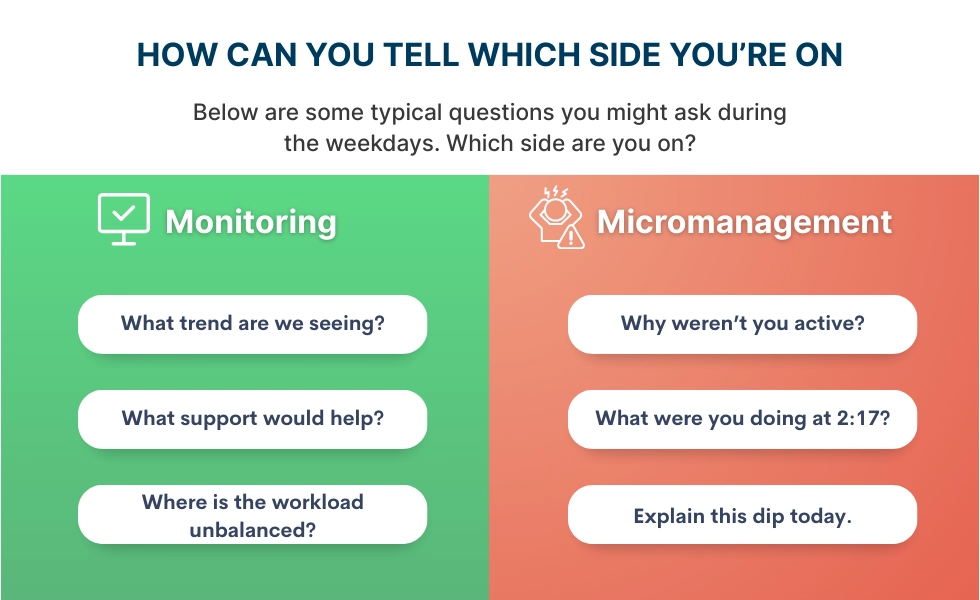
WorkTime - zero micromanagement!


Micromanagement never sees employee input
Micromanagement tends to fail for one reason that doesn’t get said out loud: it is designed around what managers can see, not what employees know. Employees understand the messy reality- Shifting priorities
- Unclear requirements
- Broken processes
- Tool overload
- Waiting on approvals.
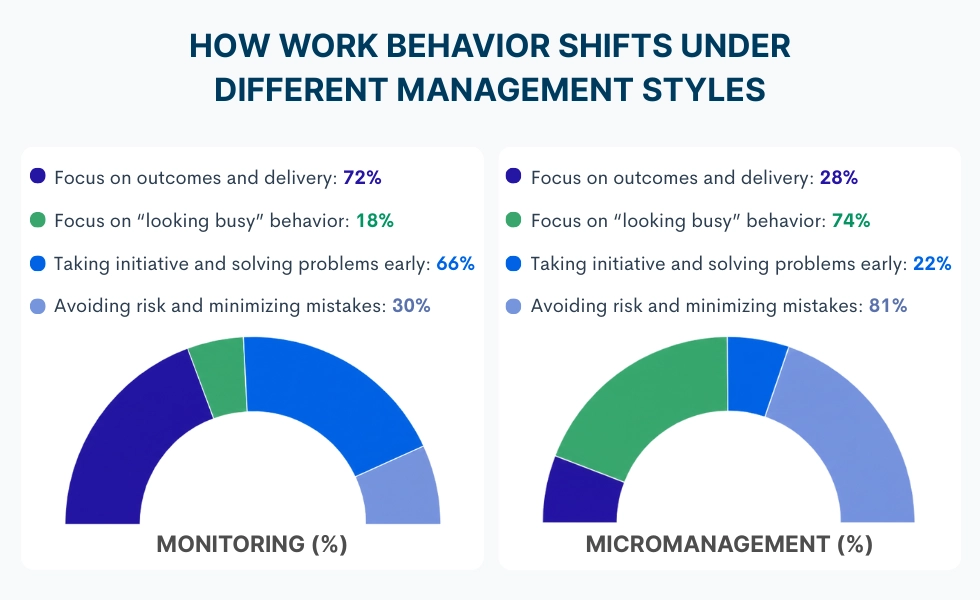
Non-invasive monitoring: meaningful insights without pressure
Non-invasive employee monitoring exists because leaders need to see what is happening in their organizations. This type of monitoring attempts to provide insight without having to micromanage employees by providing decision-ready signals about trends and goals. Non-invasive monitoring provides meaningful insight without pressure:- Trend signals over time (direction and consistency)
- Workload visibility and capacity patterns
- Fair, consistent performance conversations
- Early warning signs (overload, bottlenecks, drift).
- Defensive behavior and reduced initiative
- More managerial “time spent” policing
- High employee engagement and monitoring tension
- Compliance and trust risks without better clarity.
Ethical monitoring drives long-term performance
The ethical monitoring of employees is not only very real, but it's also scalable. At least much more so than traditional compliance-oriented oversight. When employees understand exactly what is being measured and the process does not include intrusive collection of their data, they will let their guard down. In place of managers having to react to day-to-day 'noise,' with non-invasive monitoring, managers will be able to view long-term trends, and employees will expend much less effort trying to prove their work visibility.WorkTime - ethical employee monitoring!
How WorkTime enables performance without micromanagement
WorkTime is built to support employee monitoring without micromanagement in real environments, remote, hybrid, and office teams, with an approach that prioritizes transparency and non-invasive measurement. That means: no screenshots, no keystrokes, and no content capture. WorkTime's non-invasive monitoring approach focuses on patterns that support workload visibility, productivity trends, and performance conversations that feel fair, consistent, and easy to explain to employees.What WorkTime actually measures (and why it works)
Instead of surveillance, WorkTime tracks metrics that are important in productivity.| Signal | What it reveals | Why it avoids micromanagement |
|---|---|---|
|
Active vs. idle time |
Workload capacity and overload patterns |
Focuses on capacity, not constant activity |
|
Productivity trends |
Direction and consistency over time |
Encourages coaching, not daily correction |
|
Work patterns across teams |
Bottlenecks, coordination gaps, and imbalance |
Supports system fixes instead of individual blame) |
Screen productivity analysis: a safe alternative to screenshots
Employee monitoring through screenshots is one of the most common scourges of micromanagement. WorkTime replaces this fear-based form of monitoring with screen productivity analysis. With screen productivity analysis, you get the same visibility into your team's productivity using application and workflow metrics, but without the "eyes on" feeling that you get with surveillance-like monitoring.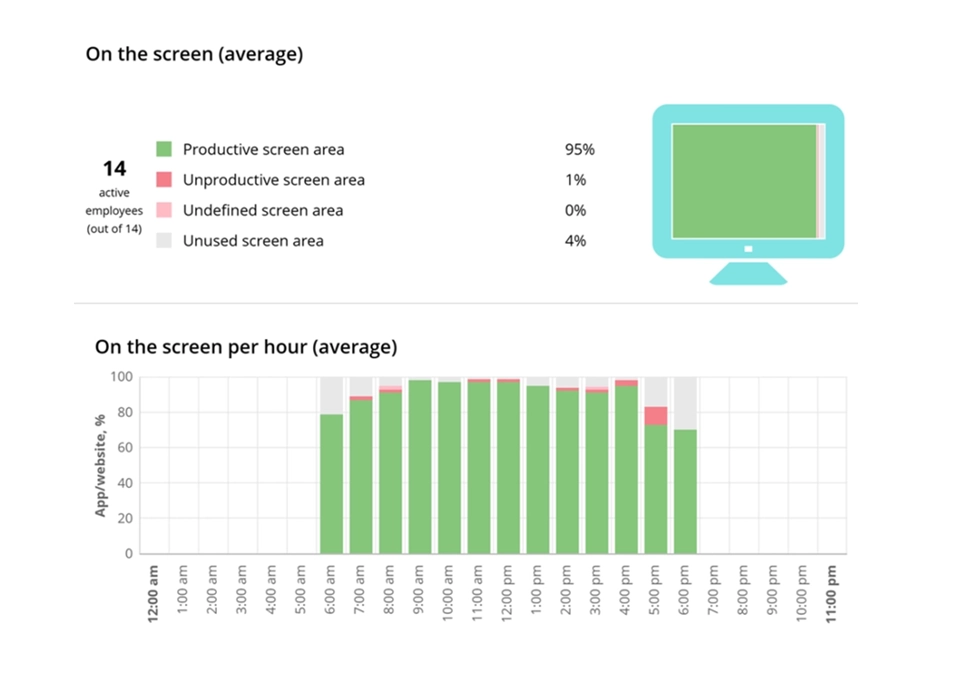

Estimate how productively employees use their screens without capturing images or invading privacy.
Start free trialTrend-based monitoring for coaching, not policing
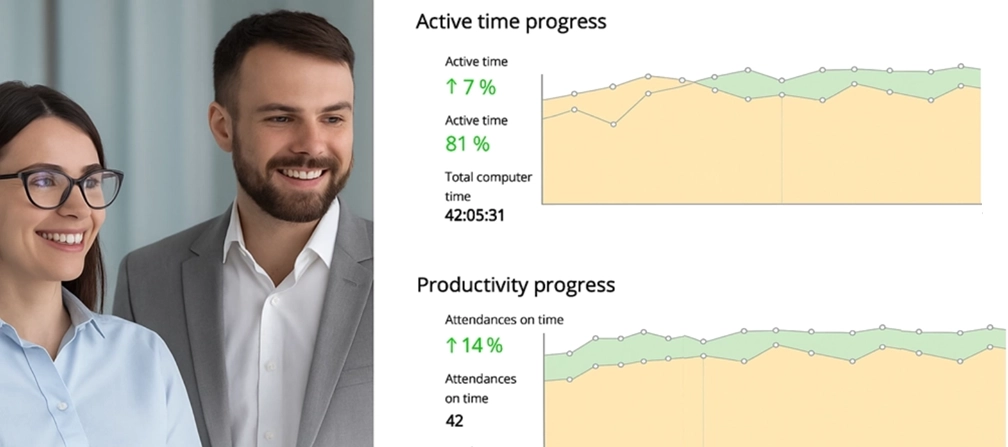
WorkTime uses trend-based reporting to help managers measure productivity, identify areas of support, and determine if their teams are trending towards overload, all while avoiding the need to react to everyday fluctuation in daily productivity. Productivity-focused monitoring supports business growth without control-driven management - our clients' experience confirms it!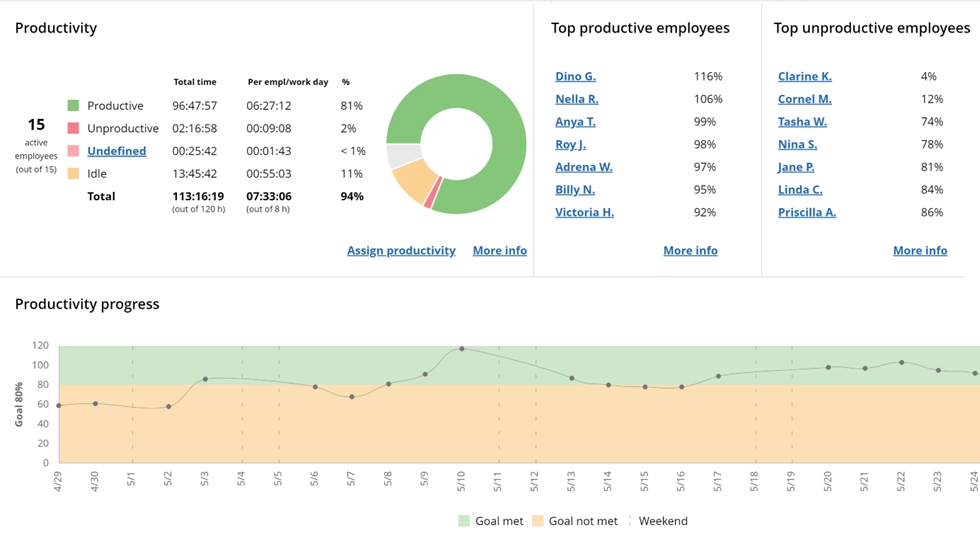

Use this report to find out whether your employee is productive during the workday based on computer usage analysis. WorkTime evaluates the productivity of each app, website, and doc.
Start free trialDesigned for trust in compliance-sensitive environments
WorkTime does not capture personal content. Thus, our employee monitoring software is much more compliant with both hybrid and distributed teams. WorkTime is ideal for teams where both transparency and the ability to provide performance insights are important.The green employee monitoring approach
WorkTime represents a green employee monitoring approach. Low intrusion, low pressure, and maximum transparency are the hallmarks of WorkTime. WorkTime allows employees to be able to understand and operate within the system, rather than feeling they have to defend themselves against the system. Why non-invasive monitoring wins? Reddit users shared their views.Go green & boost performance with WorkTime!
Everyone is embracing green these days, and although "green" monitoring won't increase your ESG score, it's something that you should be aware of. In business, the lifeblood of your company is your employees, and if those employees don't feel valued or feel like they are living under an authoritarian regime, they won't be happy. Happy employees equal productive employees, and productive employees equal money in your pocket. The smartest decision you can make this year is to get some visibility in the office that everyone can buy into. In other words, look into WorkTime now!Try WorkTime now!